By Akin Olaniyan
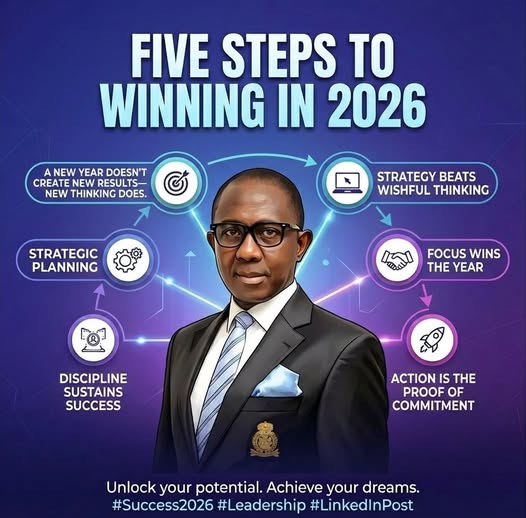
Step 1 – A new year doesn’t create new results – new thinking does: The most effective professionals start by pausing to assess how they think, decide, and respond under pressure – not to dwell, but to recalibrate. Most limitations aren’t external; they’re internal. Fear masks itself as “being realistic.” Procrastination disguises itself as “waiting for clarity.” Comfort convinces us we’re being patient. Every new level brings resistance, and the first resistance is almost always mental. Growth begins when you confront the thinking patterns that quietly limit your performance.
Action point: Identify one belief or habit that held you back before – and commit to challenging it now.
Step 2 – Strategy Beats Wishful Thinking: Confidence without a plan is just hope with good branding. Many start the year inspired – fewer start prepared. Believing in your potential matters, but belief alone doesn’t move outcomes. High performers pair ambition with structure. Strategy turns intention into execution. Writing goals down forces clarity – turning ideas into decisions and decisions into timelines. A year without a plan often becomes a year of activity – but little progress.
Action point: What exactly are you building this year? Define it. Write it down. Decide how you’ll execute.
Step 3 – Action Is the Proof of Commitment: Goals don’t change careers. Action does. Planning matters, but without execution, momentum stalls. Progress doesn’t require perfect conditions – it requires movement. Momentum is built by doing, adjusting, and continuing – not by waiting until confidence arrives. Often, what delays growth isn’t opposition – it’s hesitation.
Action point: Choose one priority and take a decisive first step this week. Small action creates forward motion.
Step 4 – Discipline Sustains Success: Motivation starts the year. Discipline decides how it ends. Most resolutions fail not because the goals are wrong, but because habits remain unchanged. Sustainable performance is built on structure: consistent routines, self-control, and acting even when enthusiasm fades. You don’t train for a marathon by exercising only when it’s convenient. Progress demands repetition and restraint.
Action point: Design habits that support the results you want – and remove the ones that don’t.
Step 5 – Focus Wins the Year: This year won’t reward busyness – it will reward focus. High performers know distraction is expensive. Not everything deserves attention, and not every opportunity deserves a yes. Progress often requires subtraction before addition. Doing less – but better – creates space for meaningful results. If everything competes for your time, nothing gets your best energy.
Action point: Audit your commitments. Decide what stays and what goes. A focused year will always outperform a busy one.