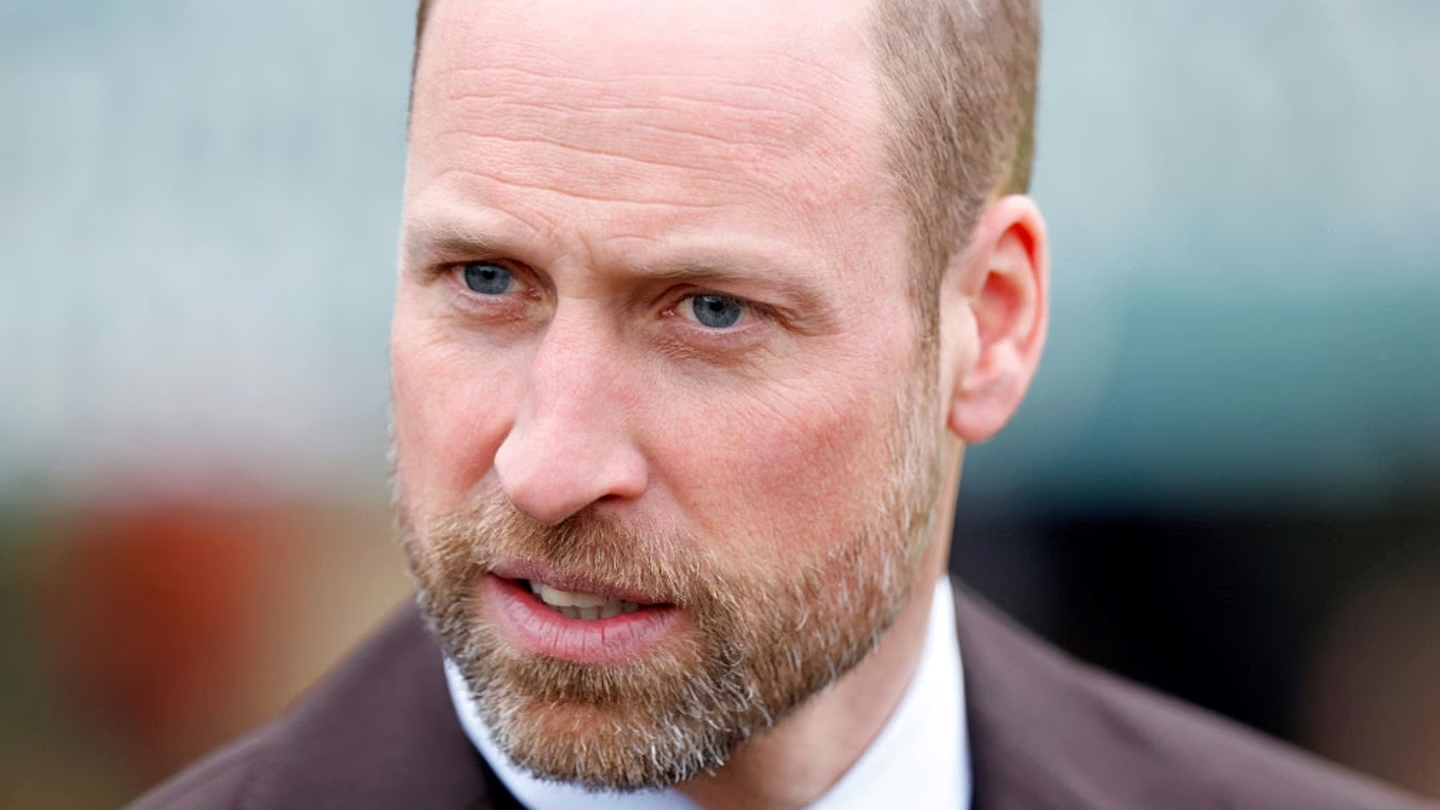
Prince William is paying an income tax bill of up to £7million a year, putting the future king in the top 0.002 per cent of taxpayers in the UK, a new report has revealed.
The Prince of Wales has refused to disclose his tax contributions in the past, though he is understood to pay the top rate of 45 per cent.
The majority of William’s income comes from the Duchy of Cornwall, a private estate worth about £ 1.1 billion, which generates more than £ 20 million a year.
Questions about tax transparency have intensified after revelations that the Cornwall estate, along with the Duchy of Lancaster, generated millions by charging public bodies, such as the NHS, the armed forces, and schools, for use of its land.
His father, King Charles III, previously disclosed that he voluntarily paid £5.9million in income tax on Duchy earnings in his final year as heir, 2021-2022.
Since then, however, neither he nor William has made their tax arrangements public.
William is understood to follow a similar approach to his father, paying the highest rate of tax of 45 per cent.
In 2023-24, the first financial year in which he oversaw the Duchy of Cornwall, William received £23.6 million.
About £13.5million of this is thought to be taxable, with William’s total income tax bill in the region of £5million to £7million, according to the Sunday Times.
The Daily Mail has approached Kensington Palace for comment.
Under a deal between the late Queen Elizabeth II and the Treasury in 2013, the monarch is not legally liable to pay income tax, capital tax gains or inheritance tax.
William is also not legally liable to pay income tax on money he receives from the duchy.
The Duchy was set up in 1337 by Prince Edward III in order to provide a pot of money for his son Prince Edward.
Dailymail