By Dada Olusegun
In the early hours of Sunday, 7th December, 2025, some elements within the Armed Forces of Benin Republic commanded by Lt. Colonel Pascal Tigri attempted to topple the democratically elected government of the Republic of Benin led by President Patrice Talon. The soldiers attacked the residence of the Beninese President and later appeared on Benin Republic’s national TV station early on Sunday morning to say they were suspending the constitution, with Lt. Col. Pascal Tigri declaring himself as the new leader of Benin Republic.
This latest coup attempt is coming just over a week after the military took over in Guinea-Bissau, another West African Nation that joined Burkina Faso, Guinea, Mali and the Niger Republic as West African countries under military dictatorship. The Benin coup attempt was one coup too many, and at the request of the Benin Republic’s legitimate democratic government, Nigeria stepped in to help quell the attempted military takeover.
As the coup unfolded in Cotonou, the Nigerian government first received a Note Verbale from the Benin Republic Foreign Ministry requesting for urgent assistance from Nigeria to confront the coupists. This was followed up by a second request from the legitimate government of Benin Republic seeking the deployment of Nigeria’s Air Force and ground forces into Benin Republic to help restore the democratic order and protect the Beninese population.
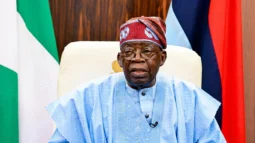
Acting on these urgent legitimate requests, President Bola Tinubu ordered the immediate deployment of fighter jets from Nigeria and ground troops into Benin Republic to flush out the coupists and restore order. This order was diligently carried out by the Chief of Defence Staff, Lt. General Olufemi Oluyede, as Nigerian fighter jets were deployed into the airspace of Benin Republic while units of Nigerian soldiers arrived in the country to assist their Benin Republic counterparts still loyal to the civil government, to quell the coup.
The fighter jets took over the airspace and helped to dislodge the coup plotters from the Benin national TV as well as from a military camp where they had regrouped. At least 14 people, including 12 of the coup plotters who went to the national TV have been arrested while a manhunt continues to track the other fleeing coup plotters who are using civilian hostages as shields. The President of Benin Republic, Patrice Talon, has since addressed his nation, affirming that the coup attempt has failed and the situation has been brought under total control.
Thanks to the decisive response by the Nigerian government and the patriotic armed forces of Benin Republic, their country today still has a functioning democracy. ECOWAS has now activated the deployment of an ECOWAS standby force made up of troops from Nigeria, Ghana, Cote d’Ivoire and Sierra Leone into Benin Republic to help the country maintain stability in the aftermath of the unsuccessful coup attempt.
Nigeria is the biggest democracy on the African continent and the dominant economic and military power in the West African sub-region. The events of the past 24 hours in Benin Republic have reminded the world of Nigeria’s importance as a regional stabilising force and a big brother to smaller nations. Nigeria’s intervention in defence of democracy in the neighbouring Benin has a lot of implications for regional stability and integration, the fight against insecurity, especially on a regional scale, as well as economic implications.