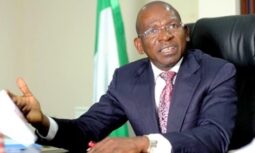
Peter Obi appears to have conveniently set aside his earlier endorsements of the Argentina and Bangladesh economic models, which he held up as examples for Nigeria. Now he champions China as the path forward.
Beyond policy flip-flops, this reveals a deeper inconsistency. China did not lift over 800 million people out of extreme poverty overnight. It took more than four decades of sustained reforms, starting from Deng Xiaoping’s opening in 1978, with massive structural changes, export-led growth, infrastructure investment, and gradual market liberalization.
Nigeria cannot simply import a “China model” in a few years. Real transformation requires consistent execution, not rhetorical pivots.
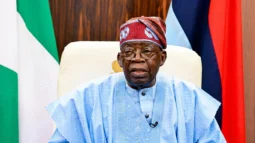
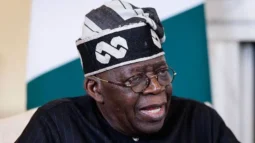
Tinubu’s Reforms Since 2023:
Painful but Foundational: President Tinubu’s administration inherited a deeply distorted economy burdened by unsustainable fuel subsidies, multiple exchange rates enabling arbitrage, and weak fiscal discipline. The key reforms include:
Fuel subsidy removal: Ended a regressive system that cost trillions annually, freed up resources, and reduced smuggling and inefficiency (though it initially spiked inflation and living costs).
FX unification: Moved to a more market-driven rate, reduced arbitrage, improved transparency, and helped stabilize reserves (now approaching or exceeding $40–50 billion in recent data).
GDP rebasing and tax harmonization: Better captures modern sectors, broadens the revenue base, and improves debt-to-GDP metrics.
Local government autonomy: Direct funding to grassroots levels for more accountable development.
Outcomes so far (as of 2025–2026 data):
Real GDP growth rebounded to around 3.4–3.9% annually, with non-oil sectors driving much of it.
futures.
Non-oil exports hit record levels ($5.45 billion in 2024, rising further to around $6.1 billion in 2025), showing diversification momentum.
Foreign reserves strengthened, inflation has moderated from peaks (though still elevated), and investor confidence indicators improved per IMF assessments.
These are structural adjustments delivering fiscal efficiency, market corrections, and revenue gains. Short-term pain—higher living costs, naira volatility, and hardship, is real and significant. No serious analyst denies the human cost. Yet the alternative (sustaining subsidies and distortions) was fiscally unsustainable and benefited elites more than citizens.
On Anambra, Peter Obi’s record as Anambra governor (2006–2014) shows strengths no fiscal prudence, savings accumulation, education partnerships with missions, and brewery.
There are limited large-scale infrastructure projects, unresolved strikes, and questions on overall industrialization depth. It was not an unmitigated disaster, nor a miracle that scaled nationally.
Nigeria’s challenges demand pragmatic, evidence-based policies, not imported Ladipo Market slogans or selective memory.
Tinubu’s approach focuses on correcting long-standing distortions to build a more productive, diversified economy. Success will depend on sustained implementation, social safety nets, and complementary investments in security, infrastructure, and human capital. Quick fixes and model-of-the-month rhetoric have not worked before and will never work.
This is why Peter Obi will never lead Nigeria with his almighty formula economic proposed failures.